
A lecture by Card. Christophe Pierre, Nuncio of the Catholic Church in the USA
During the first decades of the XXI century, the intellectual, political, and cultural debate in the United States has been marked by the emergence of two main ideologies that, although seemingly opposed, share a common root: the dissatisfaction with the liberal paradigm inherited from modernity.
On the one hand, the so-called woke culture has highlighted the inadequacies of classical liberalism to address the historical wounds of slavery, structural racism, gender discrimination and social exclusions that persist in society.
On the other hand, the so-called post-liberal movement seeks to transcend the liberal order, denouncing the insufficiency of individualism and the corrosive power of deregulated markets, and proposing instead economic protectionism, as a revaluation of the community, of tradition and, in some cases, of a confessional role
of religion in public life.
Political liberalism, based on the primacy of individual autonomy, the neutrality of the State and the free market, is facing a legitimacy crisis. Growing economic inequalities, democratic disenchantment, erosion of trust in institutions, and cultural fragmentation have weakened the liberal promise of freedom, equality, and prosperity. The 2008 financial crisis, followed by crisis of the outbreak of the Coronavirus have intensified this perception, sharpening ideological polarization in the United States.
In this context, both woke culture and post-liberalism are presented as alternative responses. The first insists on the centrality of identity and the need for a restorative historical memory but is often subject to relativism and disconnection with reality.
The second stresses the importance of the common good (understood as the good of my community), and of the so-called ordo amoris (first me, then my family, and then my country, not worrying much about the fate of the rest of the world), sliding towards authoritarian temptations or towards a fundamentalism that contradicts the legitimate plurality of modern life.
In the face of these incomplete or problematic alternatives, the Social Doctrine of the Church offers a more complete vision. From Rerum novarum (1891) to Fratelli tutti (2020), the Magisterium has insisted on the inseparability of the dignity of the human person and its social dimension. The Church has denounced false
anthropologies that reduce the human being to a consumer but has also warned against those that dilute the universal truth into an irreconcilable multiplicity of identities. Instead, it proposed a path based on universal fraternity, solidarity and the common good, correctly understood as the good of the human family, which in turn
is made up of concrete people. keep reading
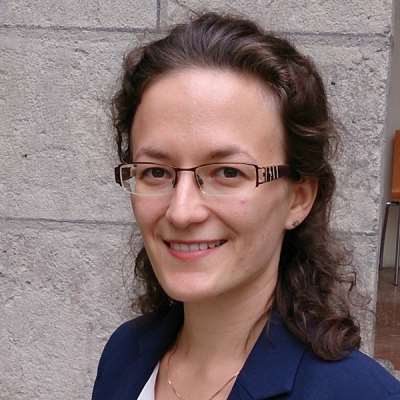
Prof. Michaela Quast-Neulinger of the Innsbruck University lecturing in Vienna about the danger Neo-Integralism brings to Democracy and to Religion itself. 28.2.26