
Recent developments on the geopolitical level have undermined multilateralism as it has been at the center of the United Nations as well as of OSCE (Organization for Security and Co-operation in Europe). Strengthening multilateralism has become a necessity to foster peace in our world today. The Swiss Chairpersonship of the OSCE has explicitly declared the strengthening of “inclusive multilateral diplomacy” as one of its key priorities for 2026.
Pope Leo XIV addressed the “weakness of multilateralism” as a “particular cause for concern at the international level” at his recent address to the members of the diplomatic corps on January 9th of this year.[1] He did not shy away to mention the current crisis regarding multilateralism: “A diplomacy that promotes dialogue and seeks consensus among all parties is being replaced by a diplomacy based on force, by either individuals or groups of allies. War is back in vogue and a zeal for war is spreading. The principle established after the Second World War, which prohibited nations from using force to violate the borders of others, has been completely undermined.” Pope Leo recognizes a gravely threatening of the “rule of law, which is the foundation of all peaceful civil coexistence.” According to Pope Leo, the purpose of multilateralism is “to provide a place where people can meet and talk.” He calls for engaging in dialogue and diplomacy.
Religions and faith communities have the potential to play an increasingly significant role in multilateralism, due to their influence as promoters of justice and equality, as well as their distance to political power struggles.
Walter Baier, the President of the European Left participated with other DIALOP members, Luisa Sello of the coordination team and Lukas Kompatscher of the Focolare-youth in Innsbruck.
[1] https://www.vatican.va/content/leo-xiv/en/speeches/2026/january/documents/20260109-corpo-diplomatico.html
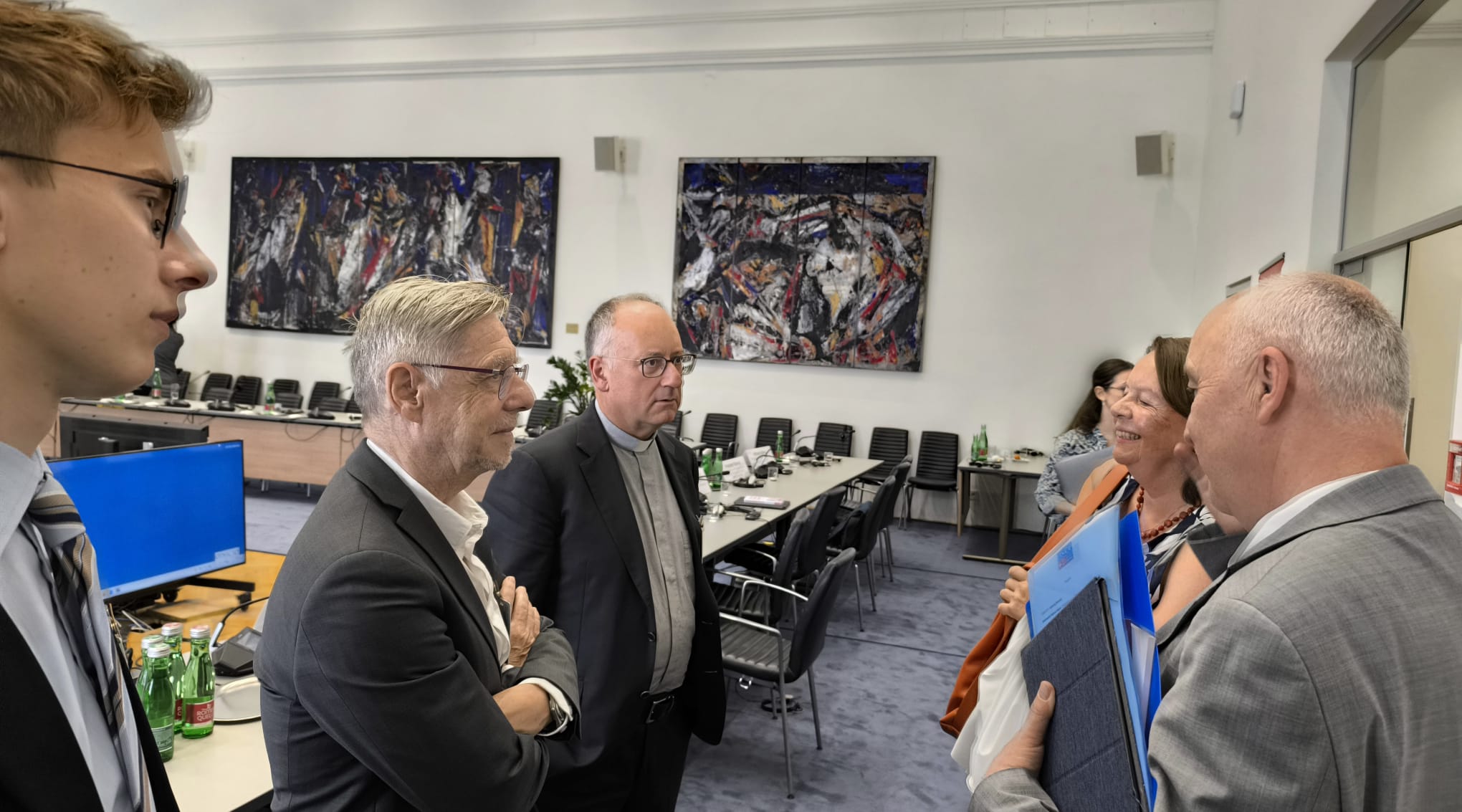
Walter Baier (second left) and Wolfgang Palaver (right) sharing with the Jesuit Fr. Antonio Spadaro and Prof. Ingeborg Gabriel at the conference.